What if Your Commute Could Write Your Health Report for You?
Imagine starting your day stressed, rushing through traffic or packed on a train, only to realize you’ve already done something amazing for your health—without lifting a finger. That’s the quiet power of today’s smart technology. While you’re simply getting from home to work, invisible tools are gathering clues about your heartbeat, stress levels, and movement patterns. What if that lost time wasn’t lost at all—but became your most personal health ally? It sounds like science fiction, but it’s already happening in pockets of real life, quietly reshaping how we think about well-being, time, and self-care. And the best part? You don’t need to change a thing—just pay attention to what your body has been saying all along.
The Hidden Hours: Rethinking Your Daily Commute
Let’s be honest—most of us don’t love our commute. Whether you’re gripping the steering wheel in gridlock, swaying on a crowded subway, or walking briskly through city streets, it often feels like time stolen from your day. We count the minutes, check the clock, and mentally prepare for the work ahead, treating the journey as nothing more than a necessary pause between home and office. But what if we’ve been wrong all along? What if, instead of wasted time, your commute is actually one of the richest sources of personal health insight you’ve never noticed?
Every time you travel, your body is sending signals. Your heart rate rises when you’re anxious about being late. Your breathing changes when you’re packed into a noisy train. Your steps slow when you’re tired, and your posture shifts when you’re distracted or overwhelmed. These aren’t just fleeting moments—they’re real, measurable indicators of how you’re feeling, both physically and emotionally. And today’s technology is finally catching up to what your body has known all along: that even in motion, you’re communicating with yourself.
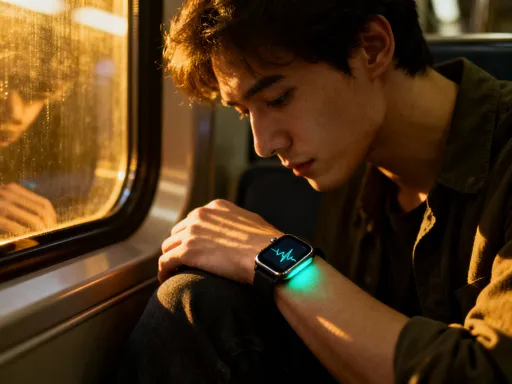
The shift begins with awareness. Once you realize that your commute isn’t just about getting from point A to point B, but also a daily check-in with your well-being, everything changes. You start to see the journey not as downtime, but as insight time. And the tools to capture that insight? They’re already in your pocket or on your wrist. Smartwatches, fitness bands, and even smartphones are equipped with sensors that can track heart rate, movement, ambient noise, and even subtle shifts in your breathing patterns—all without you doing a thing. This isn’t about adding another task to your day. It’s about finally using time you already spend, in a way that serves you.
Think about it: the average American spends about 27 minutes each way commuting, totaling nearly 200 hours a year. That’s the equivalent of five full work weeks—time we usually think of as lost. But what if those hours could work for you? What if, instead of arriving at work drained, you could use that time to understand your stress levels, spot early signs of fatigue, or even catch a pattern that’s been quietly affecting your sleep or mood? That’s the promise of passive health tracking. It doesn’t ask you to meditate, journal, or take extra steps. It simply listens while you live.
From Steps to Stories: How Health Reports Are Quietly Built
We’ve all seen step counters. Many of us have checked our heart rate after climbing stairs or glanced at our sleep score in the morning. But modern health tracking has moved far beyond numbers on a screen. Today’s smart systems don’t just collect data—they turn it into stories. And not just any stories, but ones that feel deeply personal, almost like a letter from your body to your mind.
Here’s how it works: every time you move, your wearable device or phone picks up signals. Your heart rate variability—how much the time between your heartbeats varies—is a powerful indicator of stress and recovery. If your heartbeats are too regular, it might mean your body is under strain. If they vary naturally, it’s a sign of resilience. Your device notices these patterns, especially during routine moments like your commute, when your body is in its natural rhythm.
Then there’s movement consistency. Are you walking at your usual pace? Do you pause more than normal? Is your route more crowded, making you breathe faster? Ambient noise levels can also tell a story—constant loud sounds might keep your nervous system on high alert without you even realizing it. All of this data is collected passively, without you opening an app or pressing a button. Over time, artificial intelligence analyzes these patterns, not to judge you, but to understand you.
The result? A health report that doesn’t look like a medical chart. Instead, it might say something like: “You’ve been more tense during morning travel this week. Your heart rate was consistently higher, and your steps were shorter. Maybe your body needs a calmer start.” Or: “Your breathing was steadier on days you left earlier. Consider giving yourself a few extra minutes.” These aren’t commands or diagnoses—they’re gentle observations, like something a close friend might say after watching you for a while.
And here’s the beautiful part: you don’t have to read the raw data. You don’t need to be a scientist or a fitness expert. The technology does the heavy lifting, turning complex signals into simple, human language. It’s like having a personal health assistant who works while you sleep, drives, or walk—someone who pays attention so you don’t have to.
Tech That Knows You: The Intelligence Behind the Scenes
The real magic of modern health technology isn’t in the gadgets themselves—it’s in how quietly they work. You don’t have to remember to start a session, wear special gear, or answer a bunch of questions. The most powerful tools are the ones you don’t even notice. They’re there, learning your rhythms, building a picture of what “normal” looks like for you—so they can spot when something’s off.
Imagine your smartwatch as a quiet observer. It knows that on most Tuesdays, you leave the house at 8:15 a.m., walk to the bus stop, and ride for 22 minutes. It knows your resting heart rate during that time is usually around 68 beats per minute. But this week, it notices your heart rate is consistently above 75, and your steps are 15% slower. It doesn’t panic. It doesn’t send an alarm. Instead, it makes a note: something’s different.
That’s passive sensing in action. It’s not about constant monitoring or surveillance—it’s about understanding. These systems are designed to learn from you over time, not to control you. They don’t expect perfection. They’re not judging you for taking the elevator instead of the stairs or for skipping a workout. They’re simply there to help you notice patterns you might miss on your own.
And privacy? That’s built in. Most of this data stays on your device, encrypted and protected. You decide what to share, if anything. The goal isn’t to send your information to a company or a cloud—it’s to give you insights that stay between you and your health. The design philosophy is human-first: technology should serve you, not the other way around.
What makes this so powerful is its timing. You’re already on the move. You’re already living your life. The tech doesn’t interrupt—it integrates. It’s there when you’re stressed, tired, or rushing, offering a moment of clarity without asking for anything in return. It’s like having a wise friend who knows when you’re not quite yourself and gently says, “Hey, you okay?”—not with words, but with data.
Real Life, Real Gains: Stories from People Who Found Time They Didn’t Know They Had
Sarah, a middle school teacher from Portland, used to dread her 35-minute train ride to work. Crowded cars, delayed schedules, and standing for most of the trip left her drained before the school day even began. She wore a smartwatch because her sister gave it to her as a gift, but she mostly ignored it—until one Sunday morning, she saw a summary in her health app: “Your stress levels are highest during weekday commutes. Consider a calmer alternative.”
At first, she laughed. “I can’t exactly teleport,” she said. But the message stayed with her. She started paying attention. On days when the train was less crowded, she felt better. On days she left 10 minutes earlier and got a seat, her afternoon energy improved. She experimented—trying a different route, listening to calming music, even bringing a small cushion. Over time, her stress markers dropped. She didn’t change her job or move closer to school. She just changed how she used the time she already had.
Then there’s James, a graphic designer in Austin, who always thought his afternoon crashes were due to poor lunch choices. But his health app showed a different story: his most stressed hours were actually in the morning, during his drive to work. “I thought I was fine,” he said. “I’d listen to podcasts and feel productive. But my body was telling a different story.”
He switched to biking two days a week. Not only did his morning heart rate stabilize, but his creativity at work improved. “I used to think exercise had to be a big effort—going to the gym, wearing workout clothes, sweating it out. But this? It just felt like part of the day. And the best part? I wasn’t adding time. I was using time I already had, more wisely.”
These aren’t extreme cases. They’re ordinary people—parents, professionals, busy adults—who discovered that small awareness leads to big changes. Better sleep. Improved mood. Fewer headaches. More patience with their kids. And the trigger wasn’t a doctor’s visit or a strict diet. It was a simple message from a device that noticed what they couldn’t.
Making It Work for You: Simple Ways to Turn Your Ride into a Health Check-In
You don’t need a new gadget to start. If you already own a smartphone or a basic fitness tracker, you’re more than halfway there. The first step is simply enabling background health tracking. Most devices have this feature turned off by default, but it’s easy to activate. Go to your health app settings, look for options like “continuous heart rate monitoring” or “stress tracking,” and turn them on.
Next, be consistent. Place your phone in the same spot during your commute—like the front pocket of your bag or the cup holder in your car. This helps the sensors collect more accurate data. If you wear a watch, make sure it’s snug but comfortable, and charge it the night before so it doesn’t die mid-journey.
Then, give it time. These insights don’t happen overnight. It takes a few weeks for the system to learn your patterns. Don’t expect a dramatic report on day one. Instead, look for weekly summaries. Many apps send a gentle recap every Sunday—something like, “This week, your calmest moments were during evening walks,” or “Your stress peaked on Wednesday morning.” Read them with a cup of tea, not a sense of urgency.
And remember: this isn’t about fixing yourself. It’s about understanding. If your data shows higher stress during commutes, don’t beat yourself up. Instead, ask, “What could make this easier?” Maybe it’s leaving earlier, trying a different route, listening to a favorite playlist, or practicing slow breathing. The goal isn’t perfection—it’s progress, one small step at a time.
Beyond the Body: How Health Insights Strengthen Emotional Balance and Daily Focus
When you start to understand your physical state, something interesting happens: your emotional world shifts too. You become more aware of how your body and mind are connected. That afternoon brain fog? It might not be from lack of coffee—it could be the lingering effect of a stressful morning commute. The short temper with your partner? Maybe it started with a tense drive home, not a disagreement.
One mother in Denver shared how her weekly health summary revealed a pattern: her anxiety levels were highest on days she dropped the kids at school and then drove straight to work. “I thought I was just tired,” she said. “But the data showed my heart rate stayed elevated for over an hour after drop-off. I realized I wasn’t giving myself a transition moment.” She started parking nearby and sitting quietly for 10 minutes, listening to soft music. Her mood improved. Her focus sharpened. “It wasn’t about doing more,” she said. “It was about allowing myself to arrive.”
This is where technology becomes more than a tool—it becomes a mirror. It reflects back what you’re feeling, often before you’ve named it. And when you see it clearly, you can respond with kindness. Instead of pushing through, you might choose to rest. Instead of reacting, you might pause. That’s emotional resilience in action—built not from willpower, but from awareness.
And when you’re emotionally balanced, everything else improves. You show up better at work. You’re more present with your family. You make clearer decisions. You stop feeling like life is happening to you—and start feeling like you’re part of it. That’s the real gift of health insights: they don’t just track your body. They help you reclaim your mind.
A Smarter, Kinder Way to Live: Reclaiming Time as a Gift, Not a Burden
The future of health technology isn’t about more screens, more alerts, or more pressure to be perfect. It’s about less effort and more meaning. It’s about using the time you already have—time you thought was lost—to listen to yourself in a deeper way. Your commute doesn’t have to be a battle. It can be a moment of quiet understanding, a daily check-in with the person who matters most: you.
When technology works in the background, it stops feeling like a distraction and starts feeling like support. It’s not about chasing fitness goals or hitting step targets. It’s about dignity. It’s about knowing you’re seen, even when you’re just sitting on a bus, staring out the window, thinking about your to-do list. It’s about realizing that care doesn’t have to be loud, scheduled, or time-consuming. Sometimes, it’s as simple as letting your watch do the listening while you live.
And in a world that often asks us to do more, be more, and move faster, that’s revolutionary. Because the real win isn’t in the data—it’s in the peace that comes from knowing yourself. It’s in the small choices that follow: leaving a few minutes earlier, taking a deep breath, choosing a calmer route. These aren’t grand gestures. They’re quiet acts of self-respect, made possible by a little tech that cares.
So the next time you’re on your way to work, don’t just count the minutes. Ask yourself: what is my body trying to tell me? You might be surprised by the answer. And more importantly, you might finally feel heard.