From Overwhelmed to in Control: How Smart Security Brought Peace to Our Home
Raising a family in today’s world comes with constant worries—did I lock the door? Is the baby okay? What if someone’s at the gate? I used to check the same things over and over, my mind always half-focused on possible dangers. Then we added smart security devices to our home. It wasn’t about high-tech gadgets—it was about reclaiming calm. Within days, the constant anxiety eased. Now, I can relax even when I’m not at home. This is not a tech story. It’s a story about peace, presence, and parenting with confidence. And if you’ve ever felt that nagging doubt in the back of your mind while driving away from home, you’ll understand exactly what I mean.
The Never-Ending Worry Cycle of Modern Parenting
Let’s be honest—motherhood today feels like being on constant alert. You pack lunches, answer work emails, help with homework, and still find time to smile at the school pickup line. But beneath the surface, there’s a quiet hum of worry. Did I turn off the stove? Is the back door locked? What if the kids are home alone and someone knocks? These aren’t dramatic fears. They’re the everyday thoughts that chip away at your peace, one small doubt at a time.
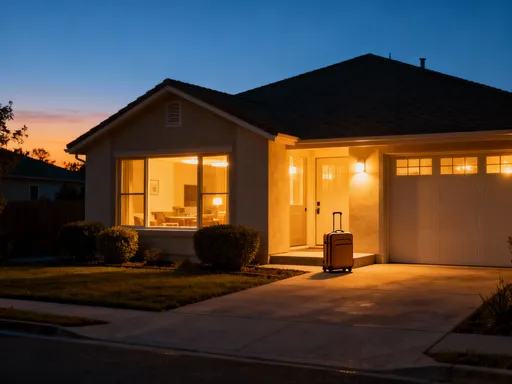
I remember one afternoon, I was at a parent-teacher conference when I suddenly froze. Had I locked the front door that morning? I couldn’t remember. I didn’t want to cause a scene, so I sat through the meeting, my mind miles away. Afterward, I drove straight home—only to find the door securely locked. I felt silly, but also exhausted. How many times had I done this? How much mental space was I giving to fears that could’ve been eased with a simple answer?
That’s when I realized: our homes are supposed to be our safe places, but for many of us, they’ve become sources of stress. We want to protect our families, but the effort to stay vigilant can wear us down. It’s not just about physical safety—it’s about emotional energy. When your brain is always scanning for danger, you’re not fully present. You miss the quiet moments: your daughter’s laugh, your son’s silly story, the way the light hits the kitchen in the late afternoon. The cost of constant worry isn’t just time—it’s presence.
Discovering Smart Security—Not for Surveillance, but for Sanity
I didn’t set out to become a tech expert. In fact, I used to roll my eyes at smart home ads. ‘Another gadget to charge, update, and figure out?’ I thought. But a conversation with my friend Lisa changed my mind. She mentioned how her video doorbell had stopped her from making that same panicked drive home. ‘I just pull up the app,’ she said. ‘If no one’s there, I go back to folding laundry.’
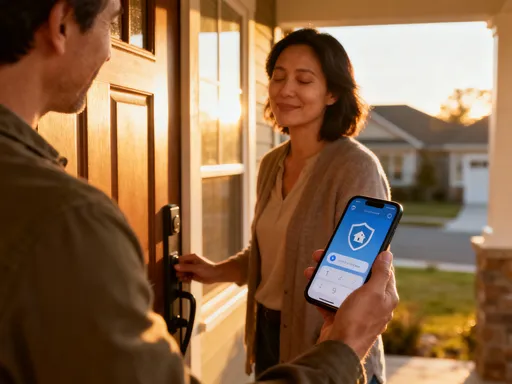
Skeptical but curious, I tried one. The first time it alerted me to a delivery, I felt a small thrill—not because I’d caught someone, but because I *knew*. No guessing, no driving back, no wasted energy. Then came the night my teenager forgot his key. Instead of rushing home, I used the app to unlock the door from my desk. He waved at the camera, I smiled, and life went on. No drama. No stress.
That’s when it hit me: this wasn’t about watching people. It was about *knowing*. Knowing the garage door closed automatically. Knowing the package arrived safely. Knowing my dog wasn’t barking at shadows. The devices didn’t take over—they stepped in so I could step back. And in that space, I found something I hadn’t realized I’d lost: calm. It wasn’t about control. It was about confidence. And confidence, I’ve learned, is the foundation of peace.
Starting Small: Choosing What Matters Most
When I first looked into smart security, I was overwhelmed by options. Cameras, sensors, alarms, smart locks, motion detectors—how was I supposed to choose? I almost gave up before I started. Then I asked myself a simple question: *What worries me most?* The answer was clear: the front door. I’d lie in bed wondering if I’d locked it. I’d check it twice, sometimes three times, before leaving the house.
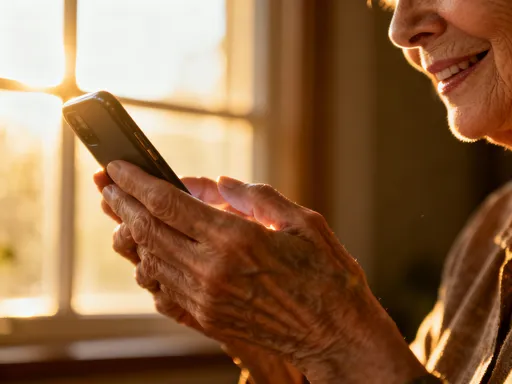
So I started with a smart doorbell. It was easy to install—no electrician, no complicated wiring. Just screw it in, connect to Wi-Fi, and download the app. The first time it rang while I was cooking dinner, I saw the mail carrier on my phone screen. No need to stop stirring the soup. No need to wonder who was there. I could see, speak, and send them on their way—all without leaving the kitchen.
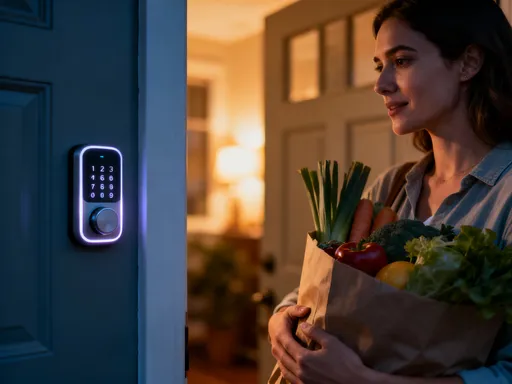
That small win gave me the courage to add one more thing: a smart lock. Now, I can lock the door with a tap on my phone. I get a notification if it’s left unlocked. And yes, I still check—old habits die hard—but now I can verify in seconds, not minutes. No more driving home to double-check. No more anxiety spirals. By focusing on one real problem at a time, I built a system that works for *my* life, not someone else’s ideal.
The lesson? You don’t need a fully automated fortress. You need solutions that answer your actual worries. Start with what keeps you up at night. Fix that. Then breathe. Then see what’s next. Progress, not perfection, is the goal.
Making It Work for the Whole Family
Tech is only as good as the people who use it. I didn’t want to be the only one managing the system. So I set up shared access for my husband and our two older kids. At first, I worried they’d ignore it or misuse it. But I was wrong. My daughter, who’s fifteen, now checks the camera when she hears the doorbell while doing homework. My son uses voice commands to arm the system at bedtime. ‘Hey, system, goodnight,’ he says, and the lights dim, the doors lock, and the alarm sets.
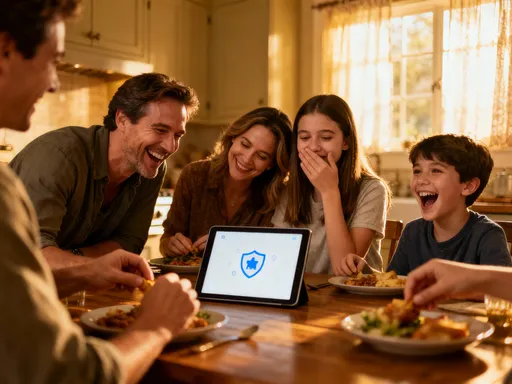
We made it part of our routine—simple, seamless, and stress-free. We also talked about why we use it. ‘We’re not watching each other,’ I told them. ‘We’re making sure no one unexpected is at the door. We’re protecting our home, not spying on each other.’ That conversation was important. It turned the tech from something suspicious into something shared. It became a family tool, not just a mom tool.
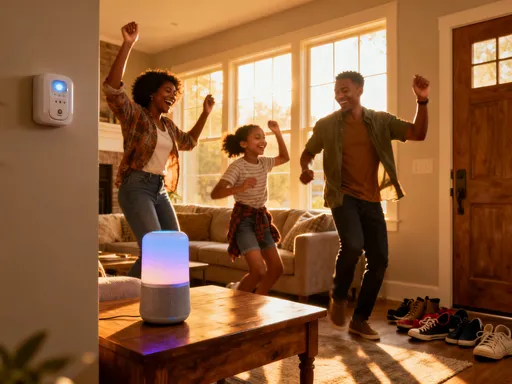
Even our ten-year-old has a role. If the doorbell rings and no one else is around, he checks the screen and calls out, ‘It’s the neighbor!’ or ‘Pizza’s here!’ He feels proud, included, and safe. And honestly? That’s the best part. The system didn’t create distance. It created connection. We’re all in this together, looking out for one another in a smarter, kinder way.
The Unexpected Bonus: More Than Just Safety
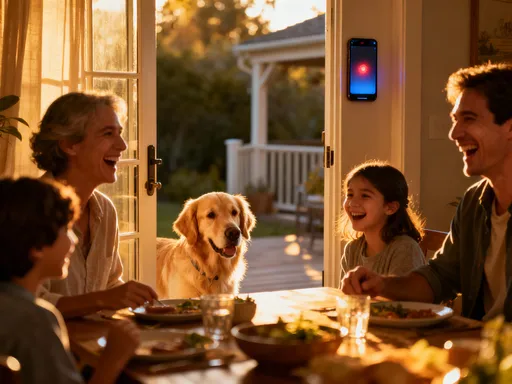
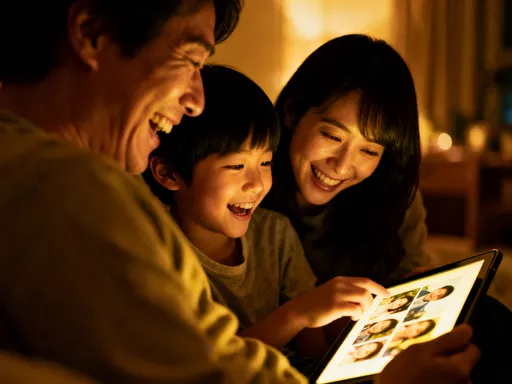
I thought smart security would just make me feel safer. I didn’t expect it to make me laugh, save money, or help me focus. But it did. One evening, I got a motion alert from the living room. I pulled up the app—and there was our golden retriever, Max, jumping onto the couch like a furry Olympic athlete. I showed the kids, and we all burst out laughing. Now, we call it ‘Max’s nightly couch jump,’ and it’s become a family inside joke.
But it’s not just fun. The motion sensors have helped us become more energy-conscious. I’ve caught lights left on in empty rooms and turned them off remotely. The system reminds us to close windows when the AC is running. Over time, that’s added up to real savings on our electric bill. Small things, yes—but they matter.
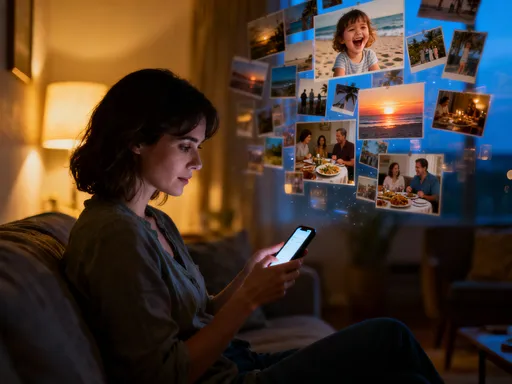
More importantly, the peace of mind has changed how I show up in my life. I used to carry my worries like a heavy bag. Now, I walk lighter. At work, I focus better because I’m not distracted by ‘what ifs.’ At home, I’m more present. I’m not mentally scanning the house—I’m listening to my daughter’s story about her day. I’m watching my son build a Lego tower. I’m *here*.
The tech didn’t transform our lives overnight. But it cleared the noise. It gave me space to breathe, to be, to enjoy the ordinary magic of family life. And isn’t that what we all want?
Avoiding the Trap of Too Much Tech
Here’s the truth: it’s easy to go overboard. Once you start, you’ll see ads for smart blinds, smart fridges, smart toilets—even smart mirrors. It’s tempting to keep adding. But I’ve learned that more gadgets don’t always mean more peace. In fact, they can create new problems: too many apps, too many alerts, too much complexity.
So I made a rule: only add something if it solves a real problem. Does it stop me from worrying? Does it save time? Does it make life easier? If not, I skip it. I don’t need a camera in every room. I don’t want to monitor my kids’ every move. Privacy matters. Trust matters. Our home is a place of love, not surveillance.
I also set boundaries. No cameras in bedrooms or bathrooms. No constant live feeds. We use the system to check in, not to watch. And we talk about it—what we see, why we see it, and when to look away. The goal isn’t to control everything. It’s to feel free. Free from worry. Free from doubt. Free to live.
By staying intentional, we keep the tech in its place: a helper, not a boss. It works for us. We don’t work for it. And that balance—that’s the secret to making smart security truly smart.
A Calmer Home, A Clearer Mind
Today, our home feels different. Not because it’s full of gadgets, but because it’s full of calm. The alerts are rare. The checks are few. The anxiety is gone. What started as a simple fix—a doorbell, a lock—became something bigger. It became a shift in how we live. We’re not just safer. We’re more connected. More present. More at peace.
I don’t miss the old cycle of worry. I don’t miss the double-checks, the second-guessing, the mental load. I’ve given that space back to joy. To laughter. To quiet moments with my family. The technology didn’t change our house. It changed *us*. It gave us confidence. It gave us time. It gave us back our evenings, our focus, our peace of mind.
If you’re standing where I once stood—tired, overwhelmed, carrying the weight of constant vigilance—know this: you don’t have to live that way. You don’t need to accept anxiety as part of motherhood. There are tools that can help. Simple, kind, thoughtful tools that support you without taking over.
Start small. Choose one worry. Solve it. Breathe. Then see how it feels to live with a little more ease, a little more trust, a little more freedom. Because you deserve to feel safe. You deserve to feel calm. And you deserve to be fully present in the beautiful, messy, wonderful life you’ve built.