How I Turned Our Honeymoon Dreams Into Reality — One Smart Cycle at a Time
Planning a dream honeymoon felt overwhelming — and expensive. Like many beginners, I didn’t know where to start investing without risking everything. But then I discovered the power of the investment cycle: timing, patience, and small, consistent moves. I tested strategies, made mistakes, and finally found a path that worked. This is how I saved for our trip without stress — and how you can too, even if you're just starting out. It wasn’t about sudden windfalls or risky gambles. It was about understanding how money grows when treated with intention, discipline, and a clear timeline. What began as a simple desire to see turquoise waters and walk barefoot on quiet shores became a journey into financial confidence — one smart decision at a time.
The Honeymoon Budget That Changed Everything
Like so many couples, we imagined our honeymoon as a perfect escape — white sand, gentle waves, and sunsets that painted the sky in gold and pink. But when we sat down to plan it, reality hit hard. Our savings account barely covered a week’s worth of groceries, let alone an international getaway. At first, we tried the usual fixes: canceling subscriptions, cutting back on takeout, and skipping weekend outings. We even gave up our daily coffee runs, saving a few dollars each day. But after months of sacrifice, the number in our travel fund barely budged. We were frustrated, discouraged, and close to giving up.
That’s when I realized something important: frugality alone wouldn’t get us there. We weren’t failing because we weren’t trying — we were failing because we weren’t strategizing. We needed a system, not just willpower. That’s when I first learned about the investment cycle — the natural rhythm of saving, growing, protecting, and using money. Instead of seeing our honeymoon as a one-time expense, I began to view it as a financial milestone, something that could be planned for with intention and precision. This shift changed everything.
I set a clear goal: $7,500 in 18 months. That gave us enough for a two-week trip to a tropical destination, including flights, accommodations, and some spending money. Breaking it down, we needed to save about $415 per month. That still felt daunting — until I realized that not all of it had to come from our paycheck. If we could make our money work for us, even a little, the timeline became manageable. The idea wasn’t to get rich quick, but to grow what we had, safely and steadily. This wasn’t about deprivation anymore — it was about empowerment.
Understanding the Investment Cycle: Timing Your Money Like a Pro
The term “investment cycle” might sound like Wall Street jargon, but in practice, it’s a straightforward concept that anyone can use. At its core, the investment cycle describes how money moves through different phases — accumulation, growth, protection, and utilization. For long-term goals like retirement, you might spend years in the growth phase. But for something like a honeymoon, the cycle is shorter and more focused. The key is aligning each phase with your timeline so your money is ready when you need it.
In our case, the 18-month window meant we couldn’t afford to take big risks early on — nor could we afford to do nothing. We started in the accumulation phase by setting up a dedicated savings account linked to our main bank. Every payday, $200 automatically transferred into this account. This ensured consistency without requiring constant attention. But we didn’t stop there. We knew that inflation could quietly erode our savings, so we looked for safe ways to earn a modest return while keeping our money accessible.
That’s when we moved into the growth phase — carefully. Instead of chasing high returns, we focused on low-volatility options like short-term bond funds and high-yield savings accounts. These aren’t flashy, but they offer better returns than traditional savings accounts with minimal risk. As our trip date approached — around the 12-month mark — we began transitioning into the protection phase. We reduced exposure to any assets that could fluctuate in value and shifted more into cash equivalents. This wasn’t about maximizing gains at the end; it was about preserving what we’d worked so hard to build.
The final phase — utilization — came when we booked our flights and accommodations. By timing our purchases to coincide with price drops and using travel rewards from a responsible credit card, we stretched our savings even further. The investment cycle wasn’t just about growing money — it was about using it wisely. And by understanding the rhythm of each phase, we avoided the panic that often comes with last-minute financial scrambling.
Starting Small: My First (Scary) Investment Move
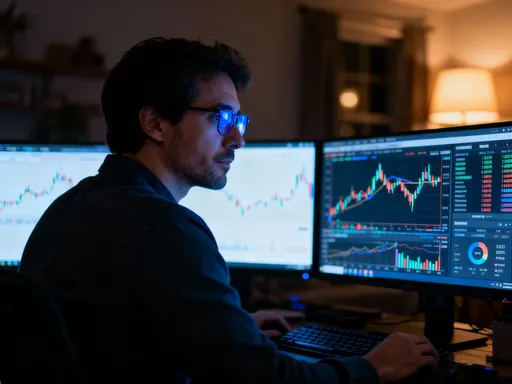
I’ll never forget the night I made my first real investment. My hands were shaky as I clicked “confirm” on an online brokerage platform. I wasn’t sending thousands — just $300, the leftover from a tax refund. But to me, it felt like a leap into the unknown. What if I lost it all? What if I picked the wrong fund? I had no background in finance, no mentor guiding me. I was learning as I went, reading articles, watching tutorials, and trying not to feel overwhelmed.
But I had to start somewhere. I chose a low-cost index fund that tracked a broad market benchmark — something simple, diversified, and historically reliable. I didn’t expect to get rich. I just wanted to begin. What I didn’t realize at the time was that this small step was the most important one. Because investing isn’t about timing the market perfectly — it’s about being in the market consistently. And once I started, I kept going.
Each month, after bills were paid, I set aside whatever I could — sometimes $100, sometimes $250. I used an app that allowed automatic contributions, so I didn’t have to remember. Over time, those small amounts added up. More importantly, I began to see how compound growth works — not dramatically, but quietly, like a plant growing beneath the soil. After six months, my initial $300 had grown to about $330. That might not sound like much, but to me, it was proof that the system worked.
Starting small also helped me build emotional resilience. Every market dip used to send me into a spiral of worry. But as I stayed the course and saw my account recover — and even grow — I became less reactive. I learned that volatility is normal, especially over short periods. What matters is long-term direction. That first $300 didn’t fund our honeymoon alone, but it gave me something even more valuable: confidence. And that confidence made every next step easier.
Balancing Risk Without Losing Sleep
One of my biggest fears was losing our honeymoon fund to a market crash. I had heard stories of people who invested in hot stocks or trendy sectors, only to see their savings vanish overnight. I didn’t want that. I didn’t need high returns — I needed reliability. So I made risk control the centerpiece of my strategy. This didn’t mean avoiding risk altogether — that’s impossible if you want your money to grow. It meant managing risk wisely, so I could sleep at night.
My approach was simple: diversification, time horizon alignment, and clear boundaries. First, I spread our investments across different asset types — a mix of bonds, dividend-paying stocks, and stable index funds. This way, if one area dipped, others could help balance it out. I avoided putting all our money into a single stock, sector, or cryptocurrency, no matter how promising it seemed. Diversification isn’t a guarantee, but it’s one of the most effective ways to reduce unnecessary exposure.
Second, I matched our investments to our timeline. Since we needed the money in less than two years, I avoided long-term, high-volatility assets. Instead, I focused on short- to medium-term instruments with a history of steady performance. As our trip date got closer, I gradually shifted more into cash and cash-like holdings. This “glide path” approach — reducing risk as the goal nears — is commonly used in retirement funds, but it works just as well for shorter goals.
Finally, I set mental and financial boundaries. I decided in advance how much I was willing to accept in fluctuations — say, a 10% drop — and committed to not selling unless something fundamentally changed. This helped me avoid emotional decisions during market downturns. When the stock market dipped six months before our trip, I didn’t panic. I reviewed our plan, confirmed our timeline, and stayed the course. That discipline paid off. Within weeks, the market recovered, and our portfolio stayed on track. Risk is part of investing, but it doesn’t have to be frightening — not when you have a plan.
Turning Gains Into Travel: When to Cash Out
One of the most challenging parts of the journey wasn’t saving or investing — it was knowing when to stop. As our account balance grew, I found myself hesitating. We were close to our $7,500 goal, but the market was still rising. I kept thinking, “What if I wait just a little longer? Maybe we can upgrade our resort or add an extra day.” That’s when I realized how easy it is to let greed — or hope — derail a well-laid plan.
The investment cycle taught me that realization — the act of locking in gains — is just as important as growth. A profit on paper isn’t real until you take it. And once you’ve hit your target, holding on too long can expose you to unnecessary risk. Our honeymoon wasn’t an open-ended goal; it had a fixed date. That meant our financial goal had a deadline too. Once we reached $7,500 — within a few hundred dollars of our target — we began moving the funds into a high-yield savings account, where they were safe and accessible.
We didn’t try to time the market perfectly. We didn’t wait for the absolute peak. Instead, we used a milestone-based approach. When we hit 80% of our goal, we started reducing our exposure to growth assets. At 90%, we shifted half into cash. By the time we reached our target, only a small portion remained in the market. This gradual exit strategy protected our gains without requiring perfect timing. It also gave us peace of mind — we knew the money was there, ready to be spent.
The moment we transferred the final amount to our travel account, I cried. It wasn’t just about the destination — it was about what we had accomplished. We hadn’t won the lottery. We hadn’t taken on debt. We had simply followed a process, stayed disciplined, and trusted the cycle. That feeling of security — of knowing we had earned this — made the trip even more meaningful.
Practical Tips That Actually Worked for Us
Looking back, our success wasn’t due to any secret strategy or insider knowledge. It came down to simple, repeatable habits that anyone can adopt. The first was automation. We set up automatic transfers from our checking account to our savings and investment accounts every payday. This removed the need for willpower and ensured consistency. Even when we were busy or stressed, the system worked for us.
Second, we reviewed our progress monthly. We didn’t obsess over daily balances or react to every market move. Instead, we scheduled a short check-in each month to assess our position, adjust contributions if needed, and stay aligned with our timeline. These small rituals kept us engaged without becoming overwhelming.
Third, we avoided distractions. The financial world is full of noise — hot stock tips, crypto hype, “get rich quick” schemes. We made a rule: if it sounded too good to be true, we didn’t touch it. We stuck to methods that were proven, simple, and aligned with our goals. That meant index funds, high-yield savings, and bond funds — not speculative bets.
Fourth, we celebrated milestones. When we hit $2,500, we treated ourselves to a nice dinner — paid for in cash, of course. These small rewards kept us motivated and reminded us that financial discipline doesn’t have to feel like punishment. And finally, we communicated openly. We talked about money regularly, shared concerns, and made decisions together. That transparency strengthened our relationship and made the journey feel like a shared mission, not a burden.
From Honeymoon Savings to Lifelong Wealth Building
What started as a plan for a dream vacation became the foundation of our financial life. After our honeymoon, we didn’t stop saving — we redirected the cycle. We opened a new account for emergency savings, applied the same principles to build a six-month cushion, and then began planning for retirement. We used the same rhythm: set a goal, choose appropriate investments, monitor progress, and adjust as needed. The process felt familiar, even comforting.
Today, that original investment account is closed, but the lessons live on. We’ve used the cycle to save for home repairs, medical expenses, and future family trips. Each goal has its own timeline and risk profile, but the framework remains the same. We’ve learned that financial peace doesn’t come from having the most money — it comes from having a plan and sticking to it.
Perhaps the most unexpected benefit was emotional. We used to feel anxious about money — guilty for spending, scared of investing, overwhelmed by choices. Now, we feel in control. We still make mistakes, of course. But we correct them quickly and keep moving forward. We’ve learned patience, discipline, and the value of small, consistent actions. And we’ve discovered that financial confidence isn’t reserved for experts — it’s available to anyone willing to start, stay the course, and trust the process.
So if you’re dreaming of a special trip, a new home, or simply a more secure future, know this: you don’t need a perfect start. You just need to begin. Use the investment cycle as your guide. Set your goal, protect your timeline, and let your money grow with purpose. The journey may take time, but every step brings you closer — not just to your destination, but to the peace that comes with knowing you’re building a life you can believe in.